
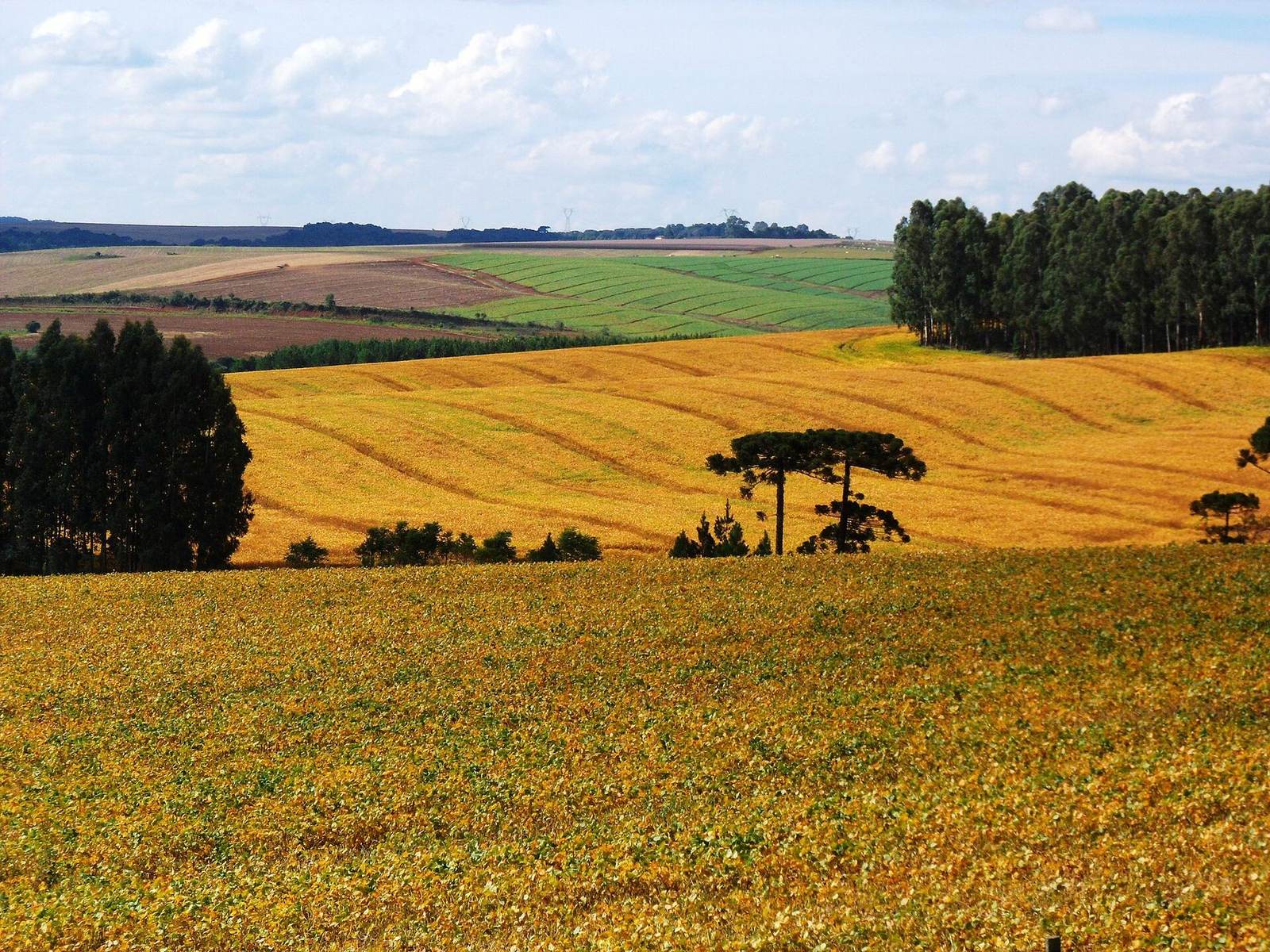
 Soybeans in Guarapuava, Paraná
TRAG Shield
Parametric insurance pays on measured weather. No field inspection.
You choose the place, the crop and the period. Satellites measure. If the weather crosses the agreed limit, the insurance pays. In TRAG Shield, brokers quote and track each policy.
The trigger is agreed in advance.
In parametric insurance, the policy defines the monitored index, the location, the coverage period and the payout rule. The index can measure, for example, accumulated rainfall or temperatures within set limits.
At the end of the contracted window, the data is assessed. If the set conditions are met, the policy payout rule applies. The calculation uses the index and the contracted limits. No field loss inspection is needed to assess the trigger.
An operation sensitive to lack of rain can buy protection for a specific window. The cover defines the rainfall volume to be tracked and the range that can trigger a payout. The rule is set before the risk period begins.
How the index is measured
Move the rain. See the payout.
The math is the same as in TRAG's policies.
Illustrative simulation. Real thresholds come from each farm's climate analysis.
Shield tracks the policy. From planting to settlement.
TRAG Shield is TRAG's platform for quoting and monitoring parametric insurance. Brokers and partners use the operation's data to assess protection, present the proposal and track the status of the contracted covers.
Shield has no subscription fee. The insurance price is shown in the quote, based on the cover and the operation assessed.
During the policy term, monitoring shows the observed indices against the policy parameters. The final assessment uses the data from the full coverage window.
Cumulative rainfall deficit · · Insured amount R$ 500,000
Eight coverages. One for each risk.
Rainfall deficit
Pays if it rains less than agreed for the period.
Excess rainfall
Pays if it rains too much, as at harvest.
Consecutive dry days
Pays for dry spells: many days in a row without rain.
Consecutive wet days
Pays for rain that won't stop: many wet days in a row.
High temperature
Pays for hot days above the agreed limit.
Low temperature
Pays for cold and frost below the agreed limit.
ICC (Climate Contribution Index)
Pays for the combined impact of rain, temperature and radiation on yield.
Wildfire
Pays for the burned area, measured by satellite imagery.
Use one or combine several. The index, the period and the payout rule are written in the policy.
Five steps, from data to result.
- 1
Operation data
Enter the location, crop, planting date, period of interest and the amount to protect.
- 2
Risk assessment
The analysis helps identify which exposure needs assessing and which covers may be a good fit.
- 3
Quote and proposal
The proposal sets out the index, period, triggers, cover amount and payout rule for the client to review.
- 4
Purchase
Purchase and issuance follow the terms and requirements of the operation, with support from the broker or partner.
- 5
Monitoring and settlement
Shield shows the status of the contracted indices. When the window closes, the data is audited and settlement follows the policy.
Traditional and parametric, side by side.
| Criterion | Loss-based crop insurance | Parametric insurance |
|---|---|---|
| Trigger basis | Assessed loss or yield, depending on the product | Index and trigger defined in the policy |
| Assessment | May require field inspections and proof of loss | Uses the specified data to calculate the index |
| Cover structure | Depends on the product and the contracted terms | Defines the index, location, window and payout rule |
| Choosing the protection | Should consider the client's risk and needs | Should consider how well the index tracks the risk of the operation |
Basis risk, explained.
Parametric cover pays on measured weather, not on the loss in the field. Most of the time the two move together. Sometimes they do not. That gap has a name: basis risk.
Questions about parametric insurance
How it works
What is parametric insurance and how is it different from the traditional crop insurance I already know?
It is insurance that pays based on a weather number agreed in advance, such as total rainfall between October and November. Once the agreed threshold is passed, it pays. Traditional crop insurance works the other way around: an adjuster goes to the field, measures the loss and only then calculates the payout. With parametric insurance there is no inspection, no report and no dispute over the size of the loss.
How does the insurer know there was a drought on my farm? Does someone come to inspect?
Nobody needs to go to the farm. Rainfall and temperature are measured every day by satellite and by official weather stations, at your farm's location. The data is public: you, the bank and the insurer all look at the same number.
How much (or how little) rain does it take for the insurance to pay?
There is no single number. The threshold is set in the policy, before planting, for your farm, your crop and the stage you want to protect. It comes from more than 40 years of weather at that location. For example: the insurance starts paying if less than 300 mm of rain falls between October and November, and pays in full below 150 mm. In between, it pays a share. The simulator on this page shows the math.
Which crops can be insured?
Soybeans, corn, cotton, coffee, planted forests and other regionally important crops.
Do you monitor the crop by satellite?
We track the climate indices contracted in the policy, every day. We do not monitor the crop by imagery, except for the wildfire cover.
Does parametric replace traditional insurance?
It can replace or complement it. It covers what traditional insurance leaves out, such as land outside the official planting calendar, and pays faster.
Is parametric insurance regulated in Brazil?
Yes. Policies are issued by insurers authorized and regulated by SUSEP, Brazil's insurance supervisor. TRAG acts as the broker and the risk analysis platform.
Where the rain is measured
What if the weather station is far from my farm and it rains there, but not on my land?
The insurance does not depend on a distant station. Measurement uses a satellite grid that divides the map into squares of about 5 km, and the square where your farm sits is the one that counts. Rain that fell in another square does not count. INMET weather stations are used to check that the satellite measures correctly: we test the datasets against 155 stations before using them.
What if the satellite records rain, but it fell on my neighbor's farm and I lost my whole crop?
It can happen, and it is important to know that before buying. Within the same 5 km square, rain is not always the same everywhere. That gap between the measured weather and what happened on your field is called basis risk. To reduce it, TRAG uses the dataset that is most accurate in your region and designs the cover with your location's history. Even so, the insurance pays on the measured number, not on the loss in the field.
Where does the data come from?
From public satellite and reanalysis datasets such as CHIRPS, CPTEC/INPE and ERA5. We test them against 155 INMET weather stations to pick the most accurate one in each region.
What it covers and what it does not
If I lose my crop to pests, disease or hail, does the insurance cover it?
No. Parametric insurance looks only at the agreed weather index, such as rainfall or temperature. Pests and disease are not included. Neither is hail: it is a very localized event and is not part of the covers today. If the loss has another cause and the weather stays within the threshold, the insurance does not pay.
If the yield drop comes from soil compaction, wrong fertilization or late planting, can the insurer refuse to pay?
Parametric insurance does not look at the cause of the loss. If the agreed index is reached, it pays, whatever the crop management. And if the index is not reached, it does not pay, even if the loss has another cause.
What if the measurement says it rained enough, but my yield collapses? Does the insurance pay the difference in bags?
No. Parametric insurance does not pay for lost bags: it pays when the weather index passes the threshold. If the index is not reached, there is no payout, even with a poor harvest. That is basis risk. That is why TRAG recommends the measure and thresholds that best tracked past failures in your area, and parametric cover can be combined with traditional insurance.
Does this insurance guarantee a minimum number of bags per hectare, or only the cash amount in the contract?
It guarantees the cash amount set in the policy, paid when the weather index passes the threshold. It does not guarantee yield or a number of bags.
If the weather hits the trigger but my crop still yields well, do I have to give the payout back?
No. The insurance pays because the agreed index was reached. What the crop yielded afterwards does not change that.
Buying and price
Will I be asked for past yield records, such as invoices and delivery slips, to sign the contract?
No. The price and thresholds come from your location's weather history, not from your yields. To get a quote you only need the farm's location, the crop, the planting date and the amount you want to protect, plus the insured's usual registration details.
If I plant outside the official planting calendar (ZARC), do I lose the right to parametric insurance?
No. Parametric insurance does not require planting within the official calendar: if the weather passes the agreed threshold, it pays. Just keep an eye on the subsidy, because PSR rules may require planting within the calendar to grant the discount.
Can I use the federal premium subsidy (PSR) or a state subsidy (such as FEAP) with this insurance?
Brazil's federal premium subsidy (PSR) may apply to some covers and lowers the price you pay. The discount depends on the insurer, the crop and the annual limit per farmer. State programs, such as FEAP in São Paulo, have their own rules and do not always apply to parametric insurance. The TRAG quote already shows whether your policy has a discount and how much.
Are there restrictions to buy?
We do not have the restrictions of conventional insurance. Post-sugarcane land, degraded pasture, crop-livestock systems, 1st and 2nd year land, planting outside the official calendar and sandy soils can all be protected.
How much does it cost?
It depends on the region, crop, period and thresholds chosen. In general it is a small share of production cost. Some covers have a federal government subsidy, which lowers the price paid.
How is the price calculated?
We look at more than 40 years of weather for that point. The question is simple: with these thresholds, how many times would the cover have paid, and how much. The more often, the higher the price.
How long does the policy last?
You choose: 30, 60 or 90 days, one crop stage (such as flowering) or the full cycle, from planting to harvest.
Does the insurance help get credit?
Yes. Banks, dealers, cooperatives and processors accept the insurance as additional collateral, which makes credit easier to get.
How do I buy it?
Through a partner broker, your dealer or cooperative, or directly with TRAG. The quote comes out instantly in TRAG Shield.
Who issues the policy?
Partner insurers, regulated by SUSEP.
What makes TRAG different?
Risk analysis per farm, fast payouts, data tested by our own research team, and dedicated technical support for dealers, brokers and farmers.
Payout
If the index is triggered, how long until the money reaches my account?
The payout is calculated straight from the measured weather data, with no adjuster or report, so it comes much faster than with traditional insurance. Each policy's payment terms are set out in its conditions.
Do I need a harvest report, invoices or proof of loss to get paid?
No. The payout depends only on the measured weather index. You do not need to prove the loss or show your yield.
Who gets paid: the farmer or the lender?
Either one. The policy can name the bank, cooperative or dealer as beneficiary. The payout then settles the credit directly, with no chasing deal by deal.
Does it pay all at once?
It pays in proportion to the shortfall. Between the starting threshold and the full-payout threshold, each extra millimeter, day or degree is worth a fixed amount, set in the policy. See the simulator above.
Start with the risk that weighs most.
Send the location, the crop and the period. TRAG assesses the risk and builds the coverage.